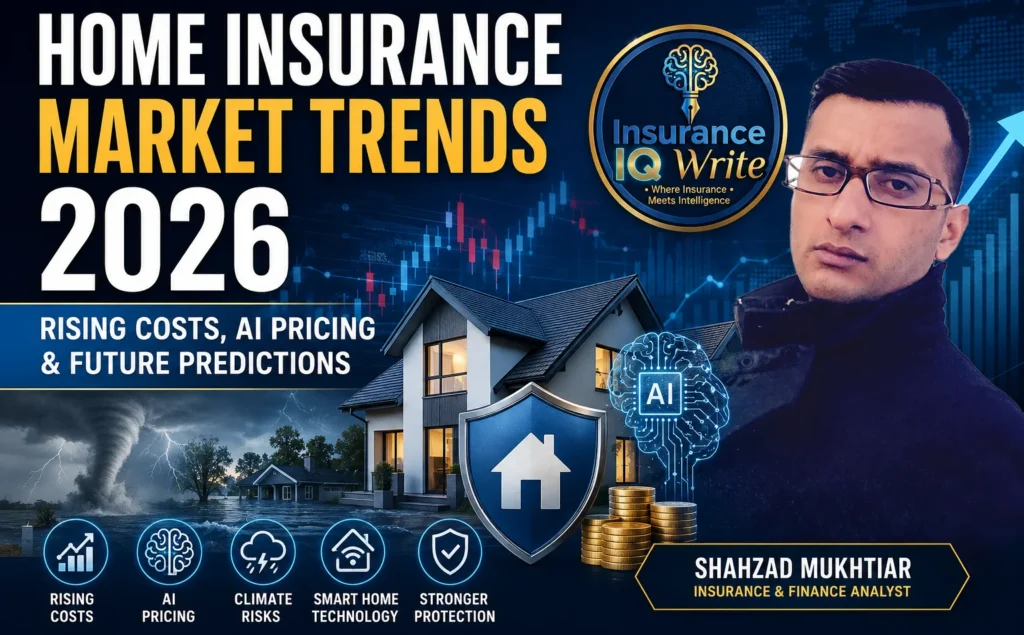
Home Insurance Market Trends 2026 are redefining the future of property protection with rising costs, AI-powered pricing, climate risks, and smarter digital insurance solutions.
Home Insurance Market Trends 2026: The Industry’s Biggest Transformation Yet
The global home insurance industry is undergoing a historic transformation in 2026. Rising climate disasters, artificial intelligence, smart-home technology, inflation, cybersecurity risks, and digital insurance ecosystems are reshaping how insurers evaluate risk and price policies.
For homeowners, insurance is no longer just about protecting property from fire or theft. Modern insurance companies now analyze:
- climate exposure,
- behavioral data,
- IoT devices,
- property analytics,
- construction costs,
- cyber vulnerabilities,
- sustainability features,
- predictive AI models.
As a result, home insurance premiums worldwide are increasing, underwriting systems are becoming more personalized, and insurers are rapidly adopting advanced technologies to stay competitive.
Industry analysts predict that the global home insurance market size was valued at USD 255.95 billion in 2025. The market is projected to grow from USD 277.18 billion in 2026 to USD 593.19 billion by 2034, exhibiting a CAGR of 10.0% during the forecast period. North America dominated the global market with a market share of 43.72% in 2025
HOME INSURANCE CALCULATOR
Estimate your mome insurance risk, coverage, premium, and Cost Online use; Insurance IQ Write Calculator
What Is Home Insurance?
Home insurance, also known as homeowners insurance or property insurance, is a policy designed to protect homeowners financially against property-related losses.
A standard policy typically covers:
- dwelling damage,
- theft,
- liability claims,
- natural disasters,
- temporary living expenses.
For example:
If a wildfire damages a property, insurance may help pay for:
- rebuilding costs,
- furniture replacement,
- hotel stays,
- debris removal.
Why Home Insurance Costs Are Rising in 2026?
Climate Change Is Reshaping Insurance Markets
Climate change has become one of the biggest drivers of global home insurance premium inflation in 2026. Insurance companies are facing record-breaking losses caused by increasingly severe natural disasters, forcing insurers to raise premiums, tighten underwriting rules, and reduce coverage in high-risk regions.
Today’s insurers are dealing with growing financial exposure from:
- floods,
- hurricanes,
- wildfires,
- severe storms,
- cloudbursts,
- earthquakes,
- coastal erosion,
- heatwaves,
- urban flooding,
- extreme rainfall events.
According to climate-risk research and insurance market reports, homeowners living in disaster-prone regions are now paying significantly higher premiums compared to lower-risk areas. Rising reinsurance costs are also pushing insurance prices upward globally.
Global Climate Events Driving Insurance Costs Higher
United States: Hurricanes, Wildfires & Coastal Flooding
Properties in:
- Florida,
- California,
- Louisiana,
- Texas coastal regions
continue seeing some of the world’s fastest premium increases due to:
- hurricanes,
- wildfire exposure,
- rising sea levels,
- catastrophic storm damage.
Some insurers have reduced coverage availability or exited high-risk markets entirely.
India & Pakistan: Summer Cloudbursts and Urban Flooding
South Asia is increasingly facing:
- extreme monsoon rainfall,
- glacier melt flooding,
- cloudbursts,
- urban drainage failures.
In northern India and Pakistan, summer cloudbursts have triggered devastating flash floods in mountainous and urban regions.
Areas including:
- Himachal Pradesh,
- Uttarakhand,
- Kashmir,
- Islamabad,
- Rawalpindi,
- Khyber Pakhtunkhwa
have experienced repeated infrastructure damage, property losses, and emergency evacuations in recent years.
These climate-related disasters are increasing property insurance risks across South Asia, particularly in densely populated cities with weak drainage systems.
Japan: Earthquakes and Tsunami Risk
Japan remains one of the highest-risk insurance markets because of:
- earthquakes,
- tsunamis,
- typhoons,
- landslides.
Insurance companies in Japan rely heavily on advanced catastrophe modeling and earthquake risk analysis.
Frequent seismic activity continues driving higher underwriting costs and stricter building requirements.
Middle East: Flooding and Extreme Weather
Traditionally dry regions in the Middle East are now experiencing unexpected flooding events linked to climate instability.
Countries including:
- United Arab Emirates,
- Saudi Arabia,
- Oman
have recently faced severe rainfall and flash floods that disrupted infrastructure, transportation, and residential communities.
Urban flood damage in cities like Dubai has increased discussions around climate-resilient infrastructure and future insurance affordability.
United Kingdom & Europe: Record Heatwaves
The UK and several European countries are experiencing increasingly severe heatwaves.
Countries affected include:
- United Kingdom,
- France,
- Spain,
- Italy,
- Greece,
- Germany.
Extreme heat is creating:
- property damage,
- wildfire risks,
- infrastructure stress,
- higher repair costs.
Southern Europe has also faced worsening wildfire seasons, forcing insurers to reevaluate risk exposure in coastal and forest-adjacent regions.
Why This Matters for Homeowners?
Climate-related disasters are no longer isolated regional problems. They are becoming global insurance challenges affecting:
- policy pricing,
- property values,
- mortgage approvals,
- rebuilding costs,
- insurer profitability.
As climate risks intensify worldwide, insurers are increasingly shifting toward:
- AI-driven risk scoring,
- predictive underwriting,
- climate-based pricing models,
- location-specific premiums.
This means homeowners in vulnerable areas may continue facing:
- higher insurance costs,
- reduced policy options,
- larger deductibles,
- stricter coverage conditions in the coming years.
AI Underwriting and Predictive Insurance Pricing
Artificial intelligence is revolutionizing insurance underwriting.
What Is Concept of Underwriting?
Underwriting is the process insurers use to evaluate risk before issuing or pricing a policy.
Modern AI systems analyze:
- satellite imagery,
- roof condition,
- neighborhood crime,
- weather history,
- historical claims,
- property maintenance,
- smart-home data.
Example
An AI-powered system may identify an aging roof from aerial imagery and automatically adjust the insurance premium based on predicted future repair risks.
Insurance companies increasingly use predictive analytics to estimate future losses rather than simply analyzing past events.
Inflation-Adjusted Replacement Costs
One of the most important trends in 2026 is inflation-adjusted replacement cost pricing.
What Does It Mean?
Replacement cost refers to the amount required to rebuild or repair a home after damage.
Because inflation has increased:
- labor costs,
- lumber prices,
- steel costs,
- transportation expenses,
insurance companies now regularly adjust property replacement values.
This trend significantly impacts homeowners because outdated policies may no longer fully cover rebuilding expenses.
Smart Homes & IoT Insurance Monitoring
What Is IoT Insurance Monitoring?
IoT stands for “Internet of Things,” which refers to internet-connected devices that collect and share data.
Insurance companies increasingly reward homeowners who install:
- leak sensors,
- smart smoke detectors,
- AI surveillance systems,
- automated shutoff valves,
- temperature monitoring devices.
These technologies reduce claims risk and improve property safety.
Example
A smart water leak detector can automatically shut off water flow before severe flooding occurs inside a home.
Many insurers now offer:
- smart-home discounts,
- lower deductibles,
- preferred risk classifications.
Home Insurance Market Trends 2026 Comparison
Consumers are comparing insurance policies more aggressively than ever before.
Digital comparison platforms now allow homeowners to evaluate:
- premiums,
- deductibles,
- climate coverage,
- smart-home discounts,
- cyber protection,
- customer satisfaction scores.
This trend is increasing market competition among insurers.
Consumers are becoming more price-sensitive because rising premiums are affecting affordability worldwide.
Blockchain in Home Insurance Market Trends 20026
Blockchain technology is slowly entering the home insurance industry. It will be a big Trend in 2026
What Is Blockchain Insurance?
Blockchain is a decentralized digital ledger that securely stores data.
Insurance companies are exploring blockchain for:
- fraud prevention,
- smart contracts,
- automated claims processing,
- policy verification,
- transparent recordkeeping.
Example
A blockchain-based smart contract could automatically approve disaster claims once verified weather data confirms a qualifying event.
Although still emerging, blockchain could significantly reduce fraud and administrative costs in coming years.
Parametric Insurance: A Growing Home Insurance Market Trends 2026
What Is Parametric Insurance?
Parametric insurance pays policyholders automatically when predefined conditions occur.
Unlike traditional insurance, payouts are triggered by measurable events such as:
- earthquake magnitude,
- rainfall levels,
- wind speed,
- flood measurements.
Example
If a hurricane exceeds a specified wind speed threshold, policyholders automatically receive compensation without requiring lengthy damage assessments.
Parametric insurance is becoming increasingly popular in climate-vulnerable regions.
ESG Insurance Policies & Green Home Discounts
What Is ESG in Insurance?
ESG stands for:
- Environmental,
- Social,
- Governance.
Insurance companies are increasingly integrating sustainability goals into underwriting strategies.
Some insurers now provide discounts for:
- solar-powered homes,
- energy-efficient buildings,
- eco-friendly construction,
- sustainable roofing materials,
- smart energy systems.
Green Home Insurance Discounts
Green homes may qualify for:
- reduced premiums,
- sustainability incentives,
- rebuilding upgrades using eco-friendly materials.
This trend is expected to grow as governments strengthen environmental regulations.
Insurance API Ecosystems & Embedded Insurance
Insurance companies are rapidly adopting API ecosystems.
What Is an Insurance API?
An API (Application Programming Interface) allows software systems to communicate automatically.
Insurance APIs enable:
- instant policy quotes,
- automated underwriting,
- real-time risk analysis,
- mortgage-integrated insurance,
- embedded insurance experiences.
Embedded Home Insurance Market Trends 2026
Homebuyers can increasingly purchase insurance directly inside:
- mortgage apps,
- banking platforms,
- real estate websites.
This simplifies the customer experience and speeds up policy approvals.
Insurance Data Privacy Laws
As insurers collect more consumer data, governments are strengthening privacy regulations.
Modern insurers increasingly gather:
- location data,
- behavioral analytics,
- smart-device activity,
- property monitoring information.
This raises concerns about:
- consumer privacy,
- algorithm transparency,
- AI bias,
- data security.
Future insurance regulation will likely focus heavily on responsible AI and data protection laws.
Gen Z Homeownership Insurance Trends
Gen Z is becoming an important force in the housing market.
Younger homeowners prefer:
- digital-first insurance,
- mobile claims processing,
- personalized policies,
- sustainability-focused coverage,
- subscription-style insurance models.
Insurers are redesigning products to appeal to tech-savvy consumers who expect fast digital experiences.
Cybersecurity & Smart Home Risk Protection
Smart homes create new cyber vulnerabilities.
Future home insurance policies may increasingly include:
- cyberattack coverage,
- identity theft protection,
- smart-device hacking protection,
- ransomware assistance.
Cyber insurance integration is expected to become a major market trend over the next decade.
Global Home Insurance Market Trends 2026 and Forecast
| Year | Estimated Market Size |
|---|---|
| 2023 | $247 Billion |
| 2026 | $277 Billion |
| 2030 | $429 Billion |
| 2034 | $593 Billion |
Industry forecasts suggest strong long-term growth due to:
- urbanization,
- climate exposure,
- digital insurance adoption,
- rising property values.
Expert Insights & Industry Perspective
Insurance experts increasingly describe the industry as moving from “reactive protection” toward “predictive protection.”
According to industry analysts:
- AI will dominate underwriting,
- climate science will shape pricing,
- personalization will increase,
- preventive technology will become essential.
Many insurers now prioritize risk prevention rather than simply compensating losses after disasters occur.
Case Study: Climate Risk and Premium Increases
Example Scenario
A coastal homeowner in Florida experienced:
- two hurricane claims within five years,
- rising flood exposure,
- increasing reconstruction costs.
As a result:
- premiums nearly doubled,
- deductibles increased,
- private insurer options decreased.
This example reflects broader global trends affecting high-risk regions.
Government Reports & Regulatory Trends
Governments and financial regulators worldwide are increasing oversight of the insurance industry as climate risks, AI underwriting, and rising premiums reshape global property markets.
Regulators are closely monitoring:
- insurance algorithms,
- catastrophe pricing,
- affordability concerns,
- AI transparency,
- consumer data privacy,
- climate-risk exposure.
These regulatory changes are expected to significantly influence the future of home insurance markets in 2026 and beyond.
United States
The United States government has become increasingly active in monitoring climate-related insurance risks.
Major agencies involved include:
- U.S. Treasury Department,
- Federal Insurance Office (FIO),
- FEMA,
- state insurance regulators.
The U.S. government is evaluating:
- climate risk disclosure requirements,
- affordability protections,
- disaster insurance reforms,
- wildfire and flood insurance programs.
States like:
- California,
- Florida,
- Louisiana
have introduced emergency insurance measures after insurers reduced coverage availability due to wildfire and hurricane risks.
The National Flood Insurance Program (NFIP) continues playing a major role in high-risk flood zones.
United Kingdom
The UK government and the Financial Conduct Authority (FCA) are increasing scrutiny of:
- AI-based insurance pricing,
- customer fairness,
- algorithm transparency,
- climate-risk reporting.
The UK also supports programs like:
- Flood Re
which helps homeowners in flood-prone regions access affordable insurance coverage.
British regulators are increasingly focused on preventing discriminatory AI pricing practices.
European Union
The European Union (EU) is introducing stronger regulations around:
- artificial intelligence,
- digital privacy,
- ESG reporting,
- climate-risk disclosure.
Key organizations include:
- European Insurance and Occupational Pensions Authority (EIOPA),
- European Commission.
The EU AI Act may directly affect how insurance companies use automated underwriting systems and consumer data analytics.
Countries including:
- Germany,
- France,
- Spain,
- Italy
are also strengthening climate resilience policies because of floods, wildfires, and heatwave-related insurance losses.
Japan
The Japanese government works closely with insurers to manage:
- earthquake risk,
- tsunami exposure,
- disaster preparedness.
Japan’s insurance market uses advanced catastrophe modeling and strict building regulations to reduce future losses.
Government-backed earthquake insurance programs remain essential in protecting homeowners.
Australia
The Australian government has increased focus on:
- flood insurance affordability,
- wildfire exposure,
- climate adaptation strategies.
Regions vulnerable to bushfires and floods have seen growing regulatory intervention to improve insurance access.
Australian authorities are also discussing:
- climate resilience infrastructure,
- public-private insurance partnerships,
- disaster mitigation funding.
India
The Indian government and the Insurance Regulatory and Development Authority of India (IRDAI) are increasingly focusing on:
- climate-risk insurance,
- disaster protection,
- digital insurance regulation.
India’s growing exposure to:
- floods,
- cloudbursts,
- cyclones,
- extreme heat
has increased pressure on insurers and policymakers to strengthen catastrophe coverage frameworks.
India is also rapidly expanding:
- digital insurance platforms,
- embedded insurance systems,
- fintech-insurance partnerships.
Pakistan
The Government of Pakistan and the State Bank of Pakistan have increased discussions around:
- climate financing,
- disaster-risk management,
- flood recovery programs.
Following catastrophic floods and recurring cloudburst events, policymakers are evaluating:
- climate-resilient infrastructure,
- agricultural insurance expansion,
- disaster recovery funding mechanisms.
Insurance penetration in Pakistan remains relatively low, but climate-related disasters are accelerating conversations around broader property insurance adoption.
Middle East Countries
Governments in:
- United Arab Emirates,
- Saudi Arabia,
- Oman
are strengthening infrastructure resilience after unexpected flooding and severe weather events.
The UAE, especially Dubai, has increased focus on:
- urban flood management,
- smart-city resilience,
- climate adaptation strategies.
Insurance regulations in Gulf countries are increasingly emphasizing:
- digital transformation,
- cybersecurity protection,
- smart infrastructure coverage.
Canada
The Canadian government is expanding climate-risk initiatives because of:
- wildfires,
- flooding,
- extreme winter events.
Canada is exploring:
- national flood insurance programs,
- catastrophe-risk partnerships,
- climate adaptation funding.
Several provinces are also investing heavily in disaster mitigation infrastructure.
Why These Regulations Matter?
Government intervention is becoming essential because climate risks and AI-driven insurance systems are rapidly changing market dynamics.
Future regulations may determine:
- how insurers use AI,
- how premiums are calculated,
- what consumer protections exist,
- how climate risks are disclosed,
- whether insurance remains affordable in high-risk areas.
The next decade will likely see much stronger collaboration between:
- governments,
- insurers,
- climate scientists,
- technology companies,
- financial regulators.
Future Home Insurance Trends Beyond 2026
1. Fully Personalized Insurance
Home insurance policies are expected to become highly personalized using AI, smart-home data, and predictive analytics. Premiums may automatically adjust based on:
- occupancy patterns,
- maintenance habits,
- climate exposure,
- property usage.
Regions Leading This Trend
- United States & Canada: AI-driven risk scoring and smart-home integrations.
- United Kingdom & Europe: Usage-based insurance and digital underwriting expansion.
- Japan & South Korea: Advanced IoT-connected smart-home insurance systems.
For example, homeowners using leak sensors, AI security systems, and preventive maintenance tools may receive lower premiums.
2. Drone-Based Claims Processing
Insurance companies are increasingly using drones and AI inspections to assess disaster damage quickly after floods, hurricanes, wildfires, and earthquakes.
Regions Adopting Drone Claims Technology
- United States: Hurricane and wildfire inspections in Florida and California.
- Australia: Bushfire damage assessment.
- Japan: Earthquake and tsunami response evaluations.
- Middle East: Urban flood inspections in UAE cities like Dubai.
Drone technology could reduce claims processing times from several weeks to just a few hours.
3. Climate Migration
Rising insurance premiums and disaster risks may increasingly influence where people choose to live, invest, and buy property.
Regions Most Affected
- Florida & California (USA): Coastal flooding and wildfire risks.
- Southern Europe: Heatwaves and wildfire exposure.
- Pakistan & India: Flood-prone and cloudburst-affected regions.
- Australia: Coastal erosion and bushfire zones.
Some high-risk areas may eventually become difficult or extremely expensive to insure.
4. AI Fraud Detection
As AI-generated scams, fake claims, and digital fraud increase, insurers are investing heavily in advanced fraud-detection systems.
Regions Expanding AI Fraud Prevention
- United States & UK: AI-powered claims verification systems.
- Singapore & Japan: Automated fraud analytics.
- European Union: Strict digital insurance compliance and fraud monitoring.
Future insurance systems may instantly detect manipulated photos, fake invoices, and suspicious claims behavior.
5. Sustainable Insurance Products
Insurance companies are increasingly supporting environmentally friendly housing and climate-resilient construction.
Regions Promoting Green Insurance
- European Union: ESG-focused insurance policies and green rebuilding incentives.
- Canada: Sustainable housing and energy-efficient home discounts.
- Australia: Climate-resilient rebuilding programs.
- UAE & Saudi Arabia: Smart sustainable city projects.
Homeowners using:
- solar panels,
- eco-friendly roofing,
- energy-efficient materials,
- water-saving systems
may receive future premium discounts and sustainability incentives.
Author’s Thoughts
The home insurance market trends 2026 represents more than a temporary premium increase. It reflects a structural shift driven by climate risk, digital transformation, and predictive technology.
Insurance companies are no longer simply evaluating historical claims. They are increasingly forecasting future behavior and environmental exposure using advanced analytics.
Homeowners who invest in:
- resilience,
- smart-home technology,
- sustainability upgrades,
- proactive maintenance
may gain major advantages in future insurance affordability and coverage access.
The next decade will likely reward prevention more than recovery.
Conclusion
Home insurance market trends 2026 show an industry rapidly evolving under the pressure of climate change, inflation, AI technology, cybersecurity threats, and digital transformation.
Insurers are increasingly adopting:
- AI underwriting,
- predictive analytics,
- blockchain systems,
- IoT monitoring,
- embedded insurance ecosystems,
- sustainability-focused policies.
At the same time, rising climate risks and rebuilding costs continue pushing premiums higher worldwide.
For homeowners, understanding these emerging trends is becoming essential for long-term financial planning, risk management, and property protection.
FAQs : Home Insurance Market Trends 2026
Why are home insurance premiums rising globally?
Premiums are increasing due to climate disasters, inflation, higher rebuilding costs, and AI-driven risk pricing.
What is AI underwriting in insurance?
AI underwriting uses machine learning and predictive analytics to evaluate property risk and calculate premiums.
What are smart-home insurance discounts?
Many insurers offer discounts for devices like leak detectors, smart alarms, and automated safety systems.
What is parametric insurance?
Parametric insurance automatically pays claims when predefined disaster conditions occur.
How does blockchain help insurance companies?
Blockchain improves transparency, fraud prevention, and automated claims processing.
What are ESG insurance policies?
ESG policies encourage environmentally sustainable and socially responsible insurance practices.
How does climate change affect home insurance?
Climate-related disasters increase insurance claims, which leads to higher premiums and stricter underwriting.
What is embedded insurance?
Embedded insurance allows consumers to purchase policies directly through apps, mortgage platforms, or digital marketplaces.
Author’s Bio : Arslan Ansari
Arslan Ansari is the CEO of Sitara Realty Pakistan and a writer specializing in real estate and home insurance. He covers topics including home insurance coverage, property protection, housing market trends, and risk management, helping homeowners and investors make informed decisions.