Explore high-growth insurance technology careers and become part of the future of modern insurance solutions.
Insurance Technology Careers (Insur Tech) – Future Jobs in Digital Insurance Industry
Introduction
The insurance industry is no longer just about paperwork, policies, and long claim processes. Today, it is being transformed by cutting-edge technologies like Artificial Intelligence (AI), Big Data, Blockchain, and Cloud Computing. This transformation has given rise to a powerful and fast-growing field called Insurance Technology (InsurTech). A space where innovation meets financial security.
According to insights from leading global firms like McKinsey & Company and Deloitte, insurers that adopt technology effectively are gaining massive competitive advantages in efficiency, customer experience, and profitability.
If you are a student, IT professional, cybersecurity expert, or already working in insurance, this field offers exciting, high-growth career opportunities. In this blog post, you’ll learn what InsurTech is, why it matters, career paths, real-life examples, and practical guidance to get started.
This article explores how to build that edge and turn it into your “secret weapon” for success.
What is Insurance Technology Careers (Insur Tech)?
Definition
Insurance Technology (InsurTech) refers to the use of modern technology to improve and automate insurance(AI) services, processes, and customer experiences. It combines “insurance” and “technology” to create more efficient and innovative systems.
From underwriting to customer experience, technology is reshaping every layer of the industry.
In simple terms:
Insurance Technology = Using technology to make insurance smarter, faster, and more customer-friendly.
Key Areas Include:
- AI-based risk assessment
- Blockchain for secure claims processing
- Data analytics for personalized policies
- Mobile apps for customer engagement
These modern technologies help insurance companies reduce costs, improve efficiency, and offer personalized policies.
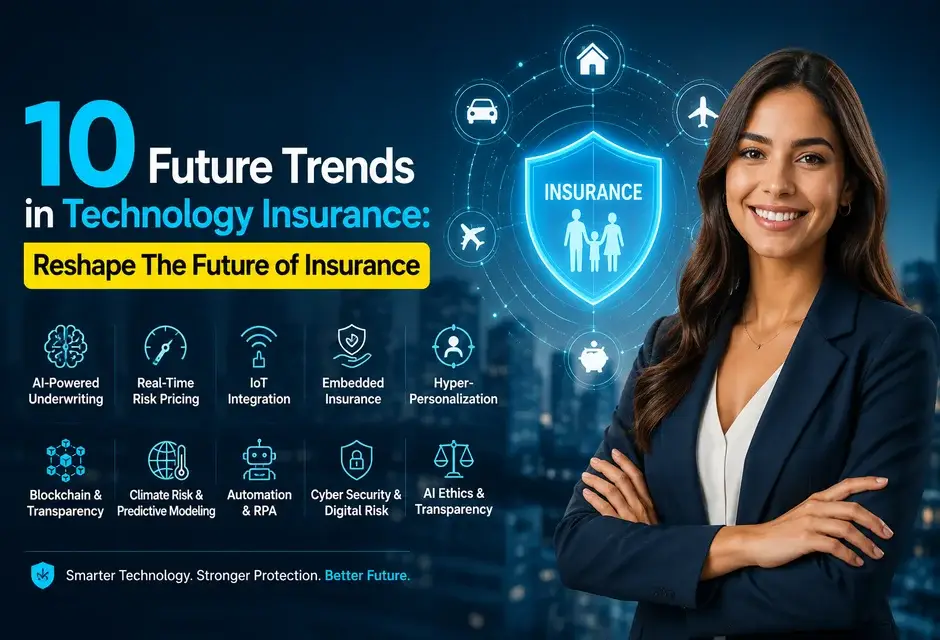
Why Insurance Technology Matters Today?
The current traditional insurance model is slow and manual. Companies suffer from on-time delivery. Insurance technology has changed that by:
- Automating claims and underwriting
- Improving fraud detection
- Enhancing customer experience
- Offering personalized pricing
- Move to AI System
For example:
- Instead of visiting an office, you can now buy insurance online in minutes
- Claims can be processed automatically using AI
- Premiums can be calculated based on your behavior (e.g., driving habits-Calculators Tool)
This shift is making insurance more accessible, faster reach, and data-driven
Real-Life Examples To USE AI and INSURTECH
1. Car Insurance (Daily Life Example)
Apps track your driving behavior (speed, braking, distance). If you drive safely, you get lower premiums.
This is powered by IoT + Data Analytics.
2. Health Insurance
Wearable devices like smartwatches track your health data. Insurers use this data to offer personalized plans.
Technology helps reduce risk and improve health outcomes.
3. Claim Automation
If your car gets damaged, you can upload photos via an app. AI assesses damage and approves claims instantly.
Faster than traditional manual processes.
4. Fraud Detection
AI systems detect unusual patterns in claims to prevent fraud.
Saves billions for insurance companies annually.
Why Choose a Insurance Technology Careers in 2026?
1. High Demand, Low Saturation
Unlike traditional tech roles, Insur Tech is still emerging. This means less competition but growing demand, especially for hybrid professionals who understand both finance and technology.
2. Diverse Career Paths
You can explore roles such as:
- Data Analyst in Insurance
- InsurTech Product Manager
- Risk Modeling Specialist
- Claims Automation Engineer
3. Competitive Salaries
Due to the niche skill set required, professionals in this field often earn higher-than-average salaries compared to standard IT roles.
4. Hybrid Skill Mastery
To stand out in 2026, your biggest advantage will be cross-domain expertise.
Core Skills to Focus On:
- Programming (Python, R)
- Data Analytics & Visualization
- Understanding Insurance Models
- AI & Machine Learning Basics
- Regulatory Knowledge
Soft Skills:
- Critical thinking
- Communication
- Problem-solving
Your secret weapon is the ability to bridge technology + insurance knowledge + business strategy.
Career Opportunities in Insurance Technology
1. For Students
Students can enter InsurTech through:
- Computer Science
- Data Science
- Finance + Technology
Entry-level roles:
- Junior Data Analyst
- Software Developer
- QA Tester
2. For Insurance Professional
If you already work in insurance, you can upgrade your career by learning tech skills:
New Roles
- Digital Underwriter
- InsurTech Product Manager
- Claims Automation Specialist
3. For IT Professionals
IT professionals are highly in demand in InsurTech:
Key Roles
- AI/ML Engineer
- Cloud Engineer
- Full Stack Developer
4. For Cybersecurity Professionals
Insurance companies deal with sensitive data, making cybersecurity critical.
Top Roles
- Security Analyst
- Risk & Compliance Specialist
- Fraud Detection Engineer
Skills Required for a Insurance Technology Careers
Technical Skills
- Programming (Python, Java, SQL)
- Data Analytics & Machine Learning
- Cloud Computing (AWS, Azure)
- Blockchain basics
Business Skills
- Understanding insurance models
- Risk analysis
- Customer experience design
Soft Skills
- Problem-solving
- Communication
- Adaptability
Step-by-Step Solution to Build Your Technology Insurance Careers
Step 1: Learn the Fundamentals
Start with the basics of insurance and digital systems.
Tech-focused → Software, AI,
Data Business-focused → Insurance + Analytics
Step 2: Get Certified
Courses in AI, fintech, or data science add credibility.
Online courses (AI, Data Science, Cloud) Insurance fundamentals
Step 3: Build Real Projects
Create portfolios like:
- Risk prediction models
- Insurance chatbot prototypes
- Insurance claim prediction model
- Fraud detection system
- Risk analysis dashboard
Step 4: Get Certifications
- AWS / Azure certifications
- Data Analytics certifications
- Insurance certifications
Step 5: Network Strategically
Connect with industry professionals via LinkedIn or forums.
Step 5: Stay Updated
Follow trends like embedded insurance, usage-based insurance, and digital underwriting.
Step 6: Apply for Jobs
Target companies
- Insurance companies
- FinTech startups
- InsurTech startups
Career Comparison: Insurance Tech vs Traditional Careers
| Factor | Insurance Technology | Traditional Insurance |
| Growth | Rapid | Slow |
| Skill Requirement | Tech + Business | Mostly Business |
| Salary | Higher | Moderate |
| Innovation | High | Limited |
Contract vs Permanent Roles
- Contract Roles: Higher pay, flexibility, project-based
- Permanent Roles: Stability, long-term benefits
In Insur Tech, contract roles are increasing due to specialized project needs.
Author’s Suggestion
If you want long-term success in InsurTech, don’t just focus on technology OR insurance—focus on both.
The most valuable professionals are “hybrid experts” who understand:

- Technology (IBM AI, Data, Cloud)
- Insurance business (risk, claims, underwriting)
This combination makes you irreplaceable in the job market.
McKinsey & Company – AI is Transforming Insurance
McKinsey highlights that AI is reshaping every part of insurance from underwriting to claims and customer service.
According to company experts,Insurance technology improves reduces accuracy,redu,ce cost and increases, growth
- AI can improve claims accuracy by 3–5%
- Reduce onboarding costs by 20–40%
- Increase premium growth by 10–15%
Insight:
Companies need professionals who can implement AI solutions across business operations.
What Changes If You Choose Technology Insurance Career?
According to PwC, Technology is the Main Driver of Change. PwC emphasizes that technology is the primary catalyst transforming insurance.
You move from routine tasks to innovation-driven work
Continuous learning becomes essential
Global opportunities increase
Work becomes more tech-focused than paperwork-heavy
Challenges in Insurance Technology
Following challenges you can face in industry
- Data privacy concerns
- Regulatory restrictions
- High competition
- Need for continuous learning
Even AI adoption comes with risks like fraud using deep fake technology, which insurers must manage carefully in the insurance technology career and profession.
Future of Insurance Technology Careers
The future along career in insurance technology looks promising because:
- Digital transformation is increasing
- AI adoption is growing
- Demand for automation is rising
Insurance Technology is expected to reshape underwriting, claims, coverage, premiums, and customer service completely
Practical Solutions for Readers
If You’re a Insurance Field Student
Start with Data Science + basic insurance knowledge
If You’re in Insurance Profession
Learn automation tools and analytics
If You’re in IT Expert
Specialize in AI, cloud, or fintech systems
If You’re in Cybersecurity
Focus on fraud detection and data protection
Conclusion
A career in insurance technology in 2026 offers a unique mix of stability and innovation. By developing hybrid skills, staying updated with trends, and applying smart SEO and career strategies, you can position yourself ahead of the curve.
Your secret weapon isn’t just technical knowledge—it’s adaptability, continuous learning, and the ability to connect multiple disciplines into one powerful career path.
Final Thoughts About Career In Insurance Technology
A career in Insurance Technology is not just a trend. It’s the future of the insurance industry for professionals. As technology continues to evolve, the demand for skilled professionals will only grow.
Whether you are a student, IT expert, or insurance professional, or a reader now is the perfect time to enter this field.
The key to success in industry: Learn technology + understand insurance = build a powerful career.
Frequently Ask Questions (FAQs)
1. What is Insurance Technology Careers(Insur Tech)?
Insur Tech is the use of modern technologies like AI and data analytics to improve insurance services and processes.
2. Is insurance technology a good career in 2026?
Yes, it is one of the fastest-growing sectors with strong demand and competitive salaries.
3. Do I need a tech background to enter InsurTech?
Not necessarily. You can start with basic tech skills and build gradually.
4. What skills are needed for InsurTech jobs?
Key skills include programming, data analysis, cloud computing, and knowledge of insurance systems.
5. What programming language is best for this field?
Python is widely used for data analysis and automation.
6. Are there remote jobs in insurance technology?
Yes, many roles offer remote and hybrid work options.
7. How long does it take to enter this field?
With focused learning, you can transition within 6–12 months.
8. Can non-IT professionals enter InsurTech?
Yes, insurance professionals can transition by learning digital tools and analytics.
9. What are the highest-paying roles in InsurTech?
Product Manager
AI Engineer
Data Scientist
Cybersecurity Specialist
10. How do I start a career in Insur Tech?
Start by learning technology skills, understanding insurance basics, building projects, and applying for entry-level roles.
11. Is coding required for InsurTech careers?
Not always. Business and product roles may not require coding, but technical roles do.
Author’s Bio
Shahzad Mukhtiar is the CEO and Content Writer at Insurance IQ and a graduate of the University of Wales. He writes about insurance technology, InsurTech, digital transformation, AI, and emerging career opportunities in the modern insurance industry.